Scientists Produce First Complete Zebra Finch Genome, Find 2,710 Hidden Genes
5 min read
Quick Answer
Researchers have announced the first complete assembly of the zebra finch genome, covering chromosomes end to end and distinguishing DNA inherited from each parent. The work added about 90 million base pairs to the previous reference, resolved 11 tiny chromosomes, and revealed 2,710 genes that were previously missing or unannotated.

Researchers have successfully produced a complete and detailed genome of the zebra finch, one of the most widely used bird models for studying vocal learning, the brain, and behavior. The study was published in Cell as part of a group of 10 research papers released simultaneously in Cell and Cell Genomics.
The new achievement differs from previous genomic references in its ability to capture the chromosomes more completely, including regions that are typically difficult to assemble because of repetitive DNA and complex sequences.
A Complete Genome From End to End
Researchers describe the new genome as a phased, diploid, telomere-to-telomere genome. In other words, it covers the chromosomes from one end to the other while distinguishing the DNA the bird inherited from each parent.
This approach allows researchers to study both copies of the chromosomes rather than relying on a single reference sequence that could hide some genetic differences between the two copies.
The team also successfully resolved all of the small chromosomes known as "dot chromosomes," bringing the total to 11 chromosomes. These regions had posed a challenge for genome assembly because of their small size and the presence of repetitive regions that are difficult to arrange precisely.
2,710 Genes Were Missing From Earlier References
One of the study's most notable findings was the identification of 2,710 genes that were missing or unannotated in previous genomic references.
There is an important distinction here: describing these genes as "newly discovered" does not necessarily mean that they recently evolved in the zebra finch. The available information from the study describes them as previously missing or unannotated, meaning some may have already existed but were not correctly represented in earlier assemblies or gene annotations.
According to the available information, the study does not establish that these 2,710 genes are responsible for vocal learning, singing, or any specific biological function.
About 90 Million Base Pairs Added
The new assembly added about 90 million DNA base pairs that were missing from the previous reference and helped close most of the remaining gaps in the genome.
The regions that can now be studied more effectively include telomeres, centromeres, small chromosomes, and the female W sex chromosome.
The available information also indicates that researchers produced the first complete assembly of the W chromosome from a female zebra finch.
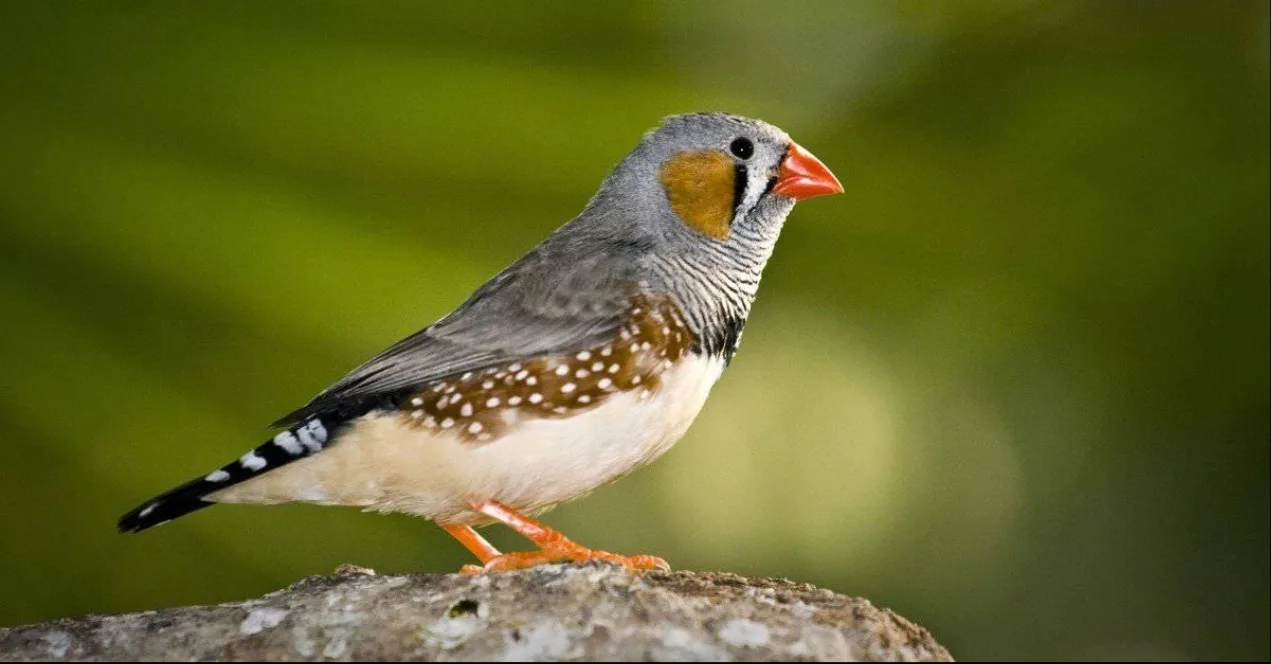
Why Was the Zebra Finch Genome So Difficult to Assemble?
Researchers faced technical challenges related to the small size of some chromosomes and the presence of large amounts of repetitive DNA, as well as difficulties determining the precise locations of regions such as centromeres, telomeres, and sex chromosomes.
To overcome these obstacles, the team combined advanced DNA sequencing technologies with specialized genome assembly and mapping methods, allowing them to build a more complete and accurate reference.
Why the New Genome Matters for Studying Vocal Learning
The zebra finch is widely used as a model for studying vocal learning, song production, neural circuits, and behavioral evolution.
The complete genome gives researchers a better tool for studying the relationship between genetic differences and processes related to singing and vocal learning, as well as for comparing the zebra finch genetically with other organisms.
It is important, however, to distinguish between what the research has demonstrated and what it may enable in the future. The study provides a more complete genomic resource, but according to the available information, it does not establish that any of the 2,710 newly identified genes plays a direct role in vocal learning.
What Did the Small Chromosomes Reveal?
The new assembly revealed details about the organization of the zebra finch's small chromosomes and made it possible to study the structure of pseudoautosomal regions associated with the sex chromosomes.
The study also provides evidence for a CENP-B-like system in bird centromeres. However, this finding should be understood as evidence for a similar system, not proof that bird centromeres function in exactly the same way as those of mammals.
Researchers have also proposed an evolutionary interpretation that some small chromosomes may preserve features of an older pattern of genome organization in vertebrates, before fusions led to the formation of larger chromosomes. This remains an evolutionary interpretation rather than a fully confirmed reconstruction of the past.
Why the Project Matters for Future Research
The new genome is not limited to research on the zebra finch itself. According to the available information, the genomic reference is being incorporated into the first phase of the Vertebrate Genomes Project, with the goal of using it for comparative genomic studies across vertebrates.
This is particularly important for researchers studying genome evolution and genetic diversity, as well as scientists interested in the evolution of vocal learning and behavior.
The achievement comes at a time when the ability to read complex regions of the genome has become increasingly important. Gaps in genomic references can lead researchers to believe that certain genes are absent when the actual problem is that those genes could not previously be properly assembled or identified.
According to the available information, this work represents the second complete genome of an organism known to exhibit vocal learning and provides researchers with a more complete genomic reference for studying the relationship between genes, the brain, and behavior.
Written by shindy
Researcher and follower of U.S. news since 2011
Frequently Asked Questions
Q: What is the zebra finch?
A: The zebra finch is a bird widely used as a scientific model for studying vocal learning, singing, the brain, behavior, and genetic evolution.
Q: What did the scientists achieve in this research?
A: Researchers produced a complete zebra finch genome that covers the chromosomes from end to end and distinguishes DNA inherited from each parent.
Q: How many genes were found?
A: The study identified 2,710 genes that were missing or unannotated in previous references.
Q: How much DNA was added to the new reference?
A: The new assembly added about 90 million DNA base pairs that were missing from the previous reference.
Q: Does the study prove that the new genes are responsible for vocal learning?
A: No. The available information does not establish that any of the 2,710 genes has a direct role in vocal learning or singing. Their importance and biological functions require further research.
Recommended For You

NYPD Prepares for Dominican Day Parade With 400,000 People Expected
The NYPD is preparing for New York’s Dominican Day Parade on August 9, with more than 400,000 people expected to attend.<h2>When and Where Is the Dominican Day Parade in New York?</h2> <p>The 44th annual National Dominican Day Parade is scheduled for Sunday, August 9, 2026, in New York City.</p> <p>The parade route runs along Sixth Avenue, also known as Avenue of the Americas, in Manhattan, from West 37th Street to West 55th Street.</p> <p>According to the available sources, more than 400,000 people are expected to attend, along with more than 10,000 parade participants and more than 40 floats.</p> <p>This year’s parade theme is “Identidad y Cultura,” meaning “Identity and Culture.”</p><h2>NYPD Security Preparations for the Parade Route</h2> <p>The New York City Police Department is preparing to provide security for the parade, manage crowds, and protect the route in Manhattan.</p> <p>Initial information indicates that the NYPD may use what has been described as a “double moat” of security barriers, intended to keep unauthorized people from entering the parade route.</p> <p>However, this information should be treated with caution. The available sources do not include independent confirmation from the NYPD or an official statement verifying details of the security system, including the design, placement, or number of barriers.</p> <p>The available information also does not include a report from a major American news source containing a verified transcript of the statement attributed to New York City Police Commissioner Jessica Tisch regarding the “double moat.”</p><h2>Why Are the Security Measures Important?</h2> <p>The focus on securing the parade route comes as organizers expect a very large event, making it one of the major celebrations of Dominican culture and heritage in New York and the United States.</p> <p>The route passes through several streets in Manhattan, with designated areas for participants to gather. West 55th Street is expected to be near the end of the parade route.</p> <p>According to the available information, the additional barriers are connected to previous efforts to prevent unauthorized people from entering parade routes. The information provided states that this approach has been used regularly since 2024, but this specific claim has not been independently confirmed by the available sources.</p><h2>A Major Parade Bringing Thousands to the Heart of Manhattan</h2> <p>The parade is expected to feature more than 10,000 participants and more than 40 floats, along with large crowds expected to gather along the route.</p> <p>Sources indicate that participant assembly begins early, with 8 a.m. listed as the time for participant formation in areas near West 36th through West 38th Streets.</p> <p>There are differences among sources regarding the parade’s start time. Some listings and coverage report an 11 a.m. start, while ABC7/WABC announced coverage beginning at noon. Based on the available information, it cannot be confirmed that this difference specifically reflects the difference between the parade’s step-off time and the television broadcast time.</p>

Hillary Clinton Slams Trump’s White House Gold Decor
Hillary Clinton criticized Trump’s White House decor, comparing its heavy use of gold to Saddam Hussein’s palaces and questioning his new ballroom project.